Astrophotography: How Many Nights Are You Really Losing Every Year?
Leave a comment / Rooftop Controller Amateur Astronomer / By Fabien
Automated observatory in astrophotography: how many nights are you really losing every year?
How many nights do you actually lose each year because of equipment setup?
It’s a question that very few astrophotographers truly ask themselves.
And yet, it is probably one of the most important questions in the entire practice.
👉 How many clear nights are actually used to capture the sky…
and how many are lost before even the first exposure is taken?
The invisible trap: the “almost ready” night
An astrophotography night does not start when the telescope captures its first image.
It starts much earlier.
And this is where the loss happens.
In theory, an astro session looks like this:
- take out the equipment
- set everything up
- start imaging sequences
- enjoy the night sky
But in reality, there is often a much less visible intermediate step:
👉 the night where “we could have imaged”, but we don’t fully commit to it.
The real cost of setup is not time… it’s mental energy
When we talk about setup, we usually think in minutes:
- 30 minutes
- 1 hour
- sometimes 2 hours
But that’s not what causes lost nights.
What actually causes lost nights is something else:
👉 the mental load even before starting
Typical questions include:
- Will I need to redo polar alignment?
- Is everything still properly aligned from last time?
- Will the weather hold long enough?
- Is it worth setting everything up for just 2–3 hours?
And very often, the conclusion is not “no”.
It’s worse:
👉 “not tonight”
The “abandonment threshold” phenomenon
There is a very common phenomenon among astrophotographers:
👉 the threshold at which a session no longer feels worth the effort
This threshold depends on several factors:
- fatigue from the day
- expected session length
- setup complexity
- weather uncertainty
- past experience (good or bad recent sessions)
And this threshold is powerful.
Because it does not block exceptional nights.
It blocks the average nights… which are actually the majority.
The problem is not the weather… it’s the launch effort
We often think lost nights are due to bad weather.
But in reality, a large portion of clear nights are not used even when conditions are good.
Why?
Because the entry cost is too high.
Typical scenario:
- clear sky from 10 p.m. to 2 a.m.
- but full setup required
- uncertainty about how stable the night will be
Result:
👉 “it’s not worth going out for that little”
And yet… “that little” is often the majority of usable nights in a year.
A rarely calculated reality: fragmented nights
There is another underestimated phenomenon:
👉 partially used nights
These are situations where:
- setup happens too late
- teardown happens too early
- or hesitation delays the start until very late
Result:
- 4 hours of clear sky → only 1 hour actually used
- or worse → no imaging at all despite usable conditions
And over a year, this completely changes real productivity.
Try doing the math (it’s rarely pleasant)
Let’s take a simple example:
- 2 potential nights per week on average
- 50% actually usable (weather + availability)
- ≈ 50 usable nights per year
Now ask an honest question:
👉 out of these 50 nights, how many are actually used from start to finish?
- long setup times
- fatigue
- doubt about sky quality
- reluctance to tear down and rebuild
Even with strong motivation, many astrophotographers end up with:
👉 20 to 30 fully used nights
Sometimes less.
It’s not a motivation problem. It’s a friction problem.
This point is important:
👉 it is not a lack of passion
Astrophotographers are rarely unmotivated.
The real issue is elsewhere:
👉 every session requires a full system reconfiguration
And this invisible friction acts like a filter.
A filter that removes small opportunities.
What if the real luxury is not the equipment… but availability?
We often talk about:
- better mounts
- better cameras
- better telescopes
But rarely about this factor:
👉 the ability to start a session without significant effort
Because in practice, it is not the quality of the equipment that limits output the most.
It is its real-world availability.
A great setup that is rarely used… produces less than a modest setup that is always ready.
The real shift: when setup disappears from the process
This is where everything changes.
When:
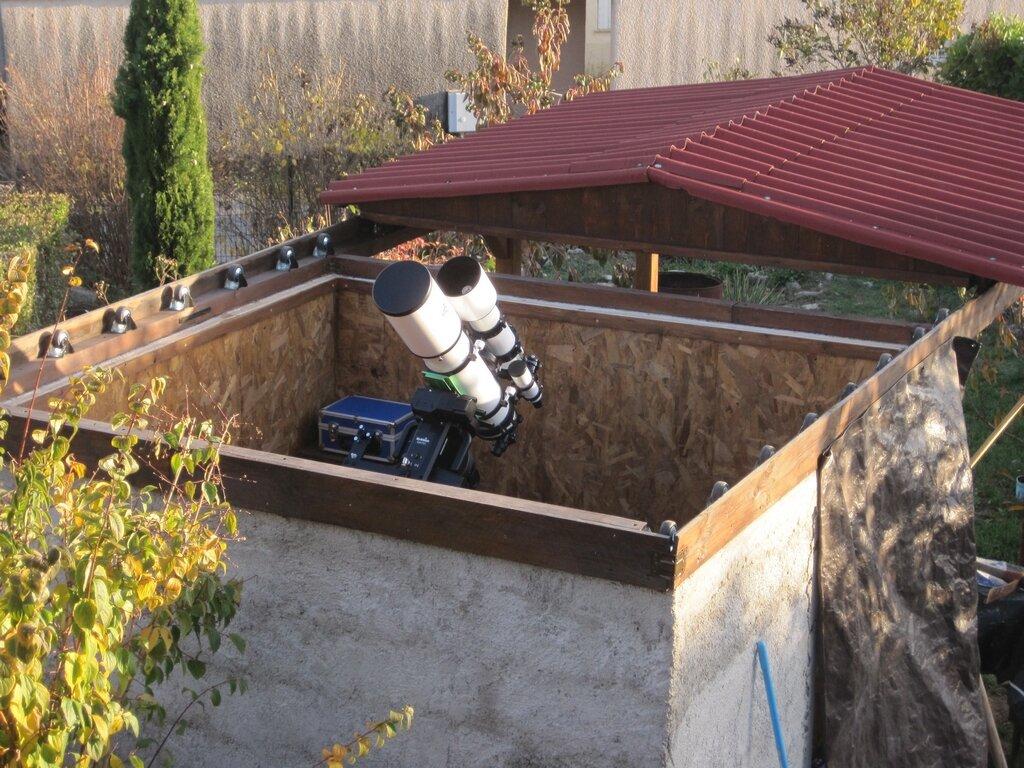
- the equipment stays in place
- polar alignment is preserved
- the system is ready for remote operation
Something fundamentally shifts:
👉 the very concept of a “usable night” expands
Previously unrealistic sessions become possible:
- 2 hours of clear sky? enough
- an unexpected window? usable
- an uncertain night? worth testing without effort
The real question to ask
The question is no longer:
👉 “Is my equipment good enough to image?”
But rather:
👉 “How many nights am I losing simply because starting is too heavy?”
And even more importantly:
👉 “How much data, experience, and progress am I not accumulating… not because of the sky, but because of my setup itself?”
Conclusion: the sky is rarely the real limitation
We often think astrophotography depends on the sky.
But in reality, for many advanced amateurs, it depends on something far more practical:
👉 how easily a potential night becomes an actual session
And this is exactly where the difference lies between:
- an occasional hobby
- and a regular, fluid, almost automatic practice
🌌 Stop losing clear nights to setup time
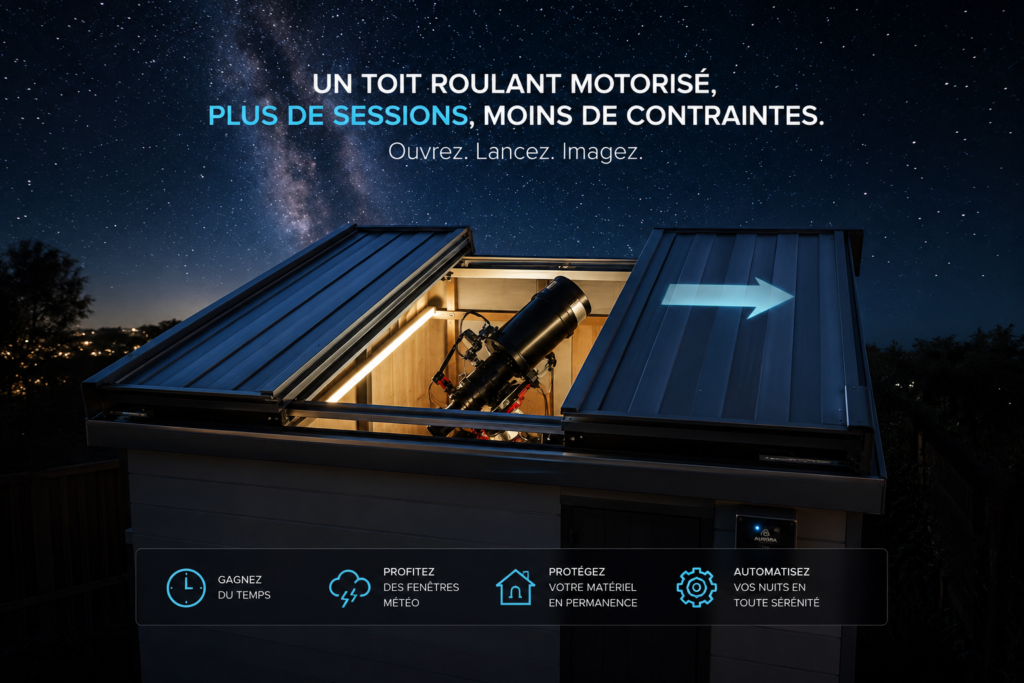
Your telescope deserves to be ready the moment the sky clears — not an hour later. Aurora 2.0 automates your roll-off roof, so your observatory opens itself.
Shipping across Europe.
Subscribe to our newsletter
Get early access to our latest articles, practical tips for your astronomical observatory, and exclusive offers.