Blog

Your blog category

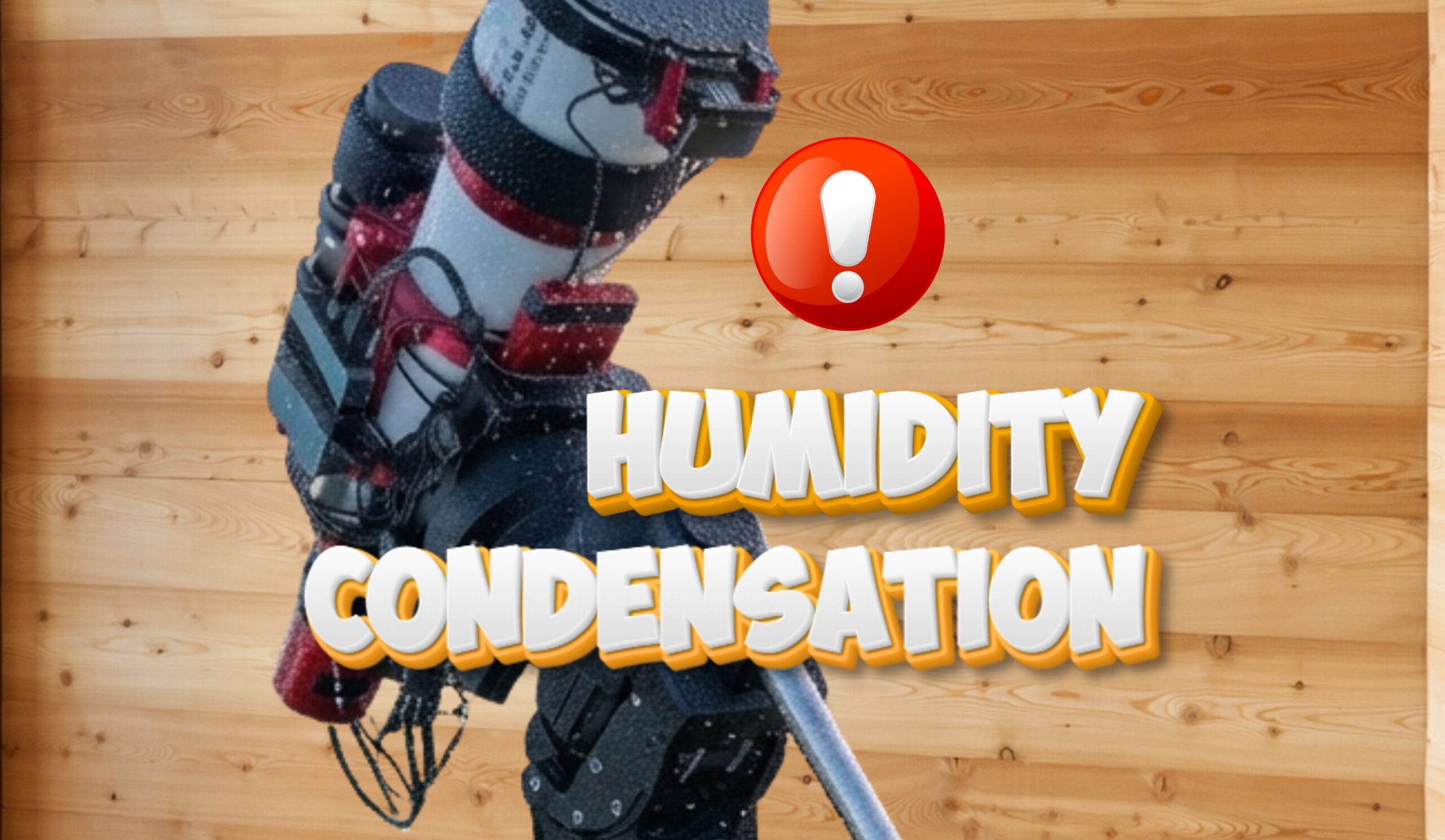
Learn how to prevent condensation in your astronomical observatory with proper ventilation, humidity control and practical design tips.

How to Prevent Condensation in an Astronomical Observatory: The Principles That Really Work

Learn how to prevent condensation in an astronomical observatory with proper ventilation, humidity control, air vents, and practical design solutions. Building an amateur astronomical observatory is an exciting project. Most people naturally focus on the rolling roof, the permanent pier, or automation. However, one critical aspect is often overlooked: humidity management. Condensation is one of […]

How to Prevent Condensation in an Astronomical Observatory: The Principles That Really Work Read More »

Découvrez les erreurs les plus fréquentes avant de construire un observatoire astronomique amateur automatisé.

Amateur Astronomical Observatory: 6 Mistakes to Avoid Before Building One

Amateur Astronomical Observatory: 6 Mistakes to Avoid Before Building Building your own astronomical observatory is a dream for many astrophotographers. Having your telescope permanently installed, being able to start an imaging session within minutes, and taking full advantage of the best nights sounds ideal. However, many projects run into the same problems: poor location, a

Amateur Astronomical Observatory: 6 Mistakes to Avoid Before Building One Read More »

Automatiser son observatoire : Quel moteur choisir pour votre toit coulissant ?

Automating Your Observatory: Which Motor Should You Choose for a Roll-Off Roof?

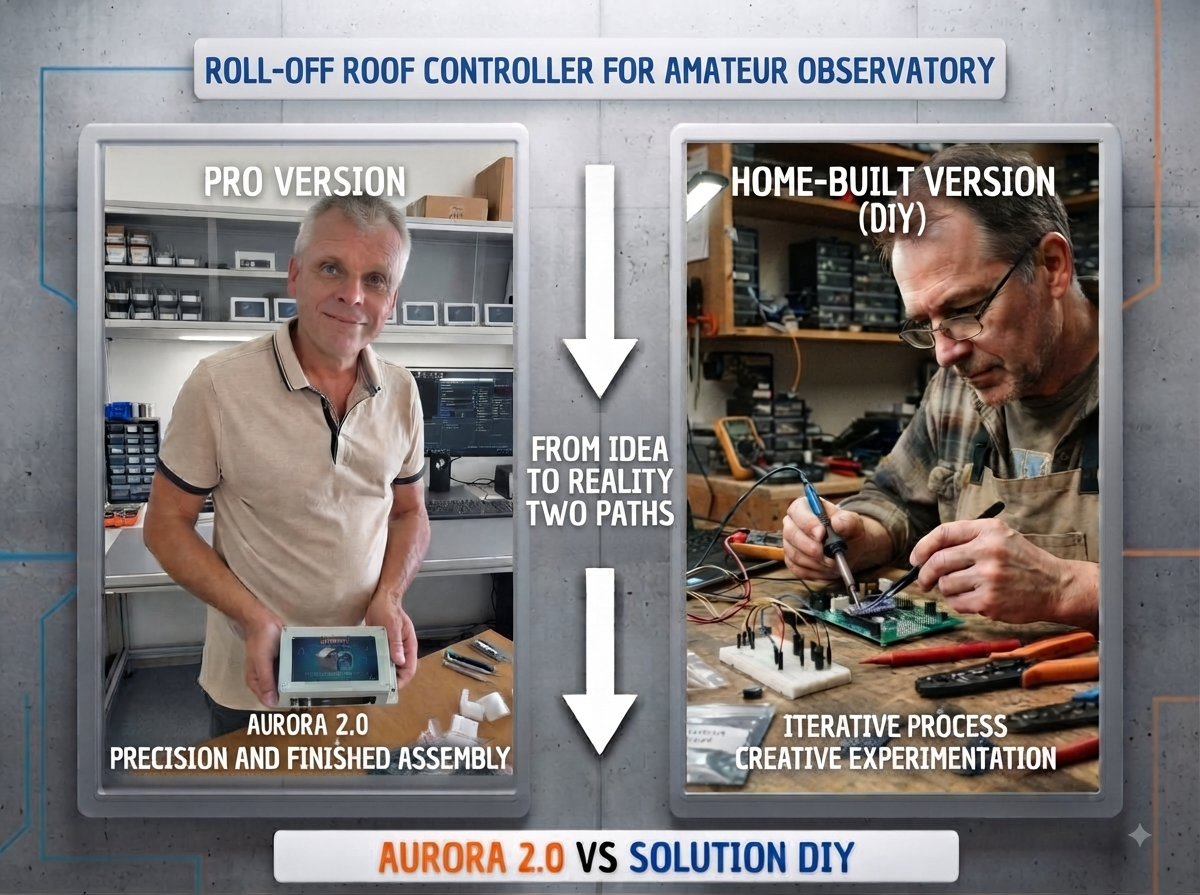
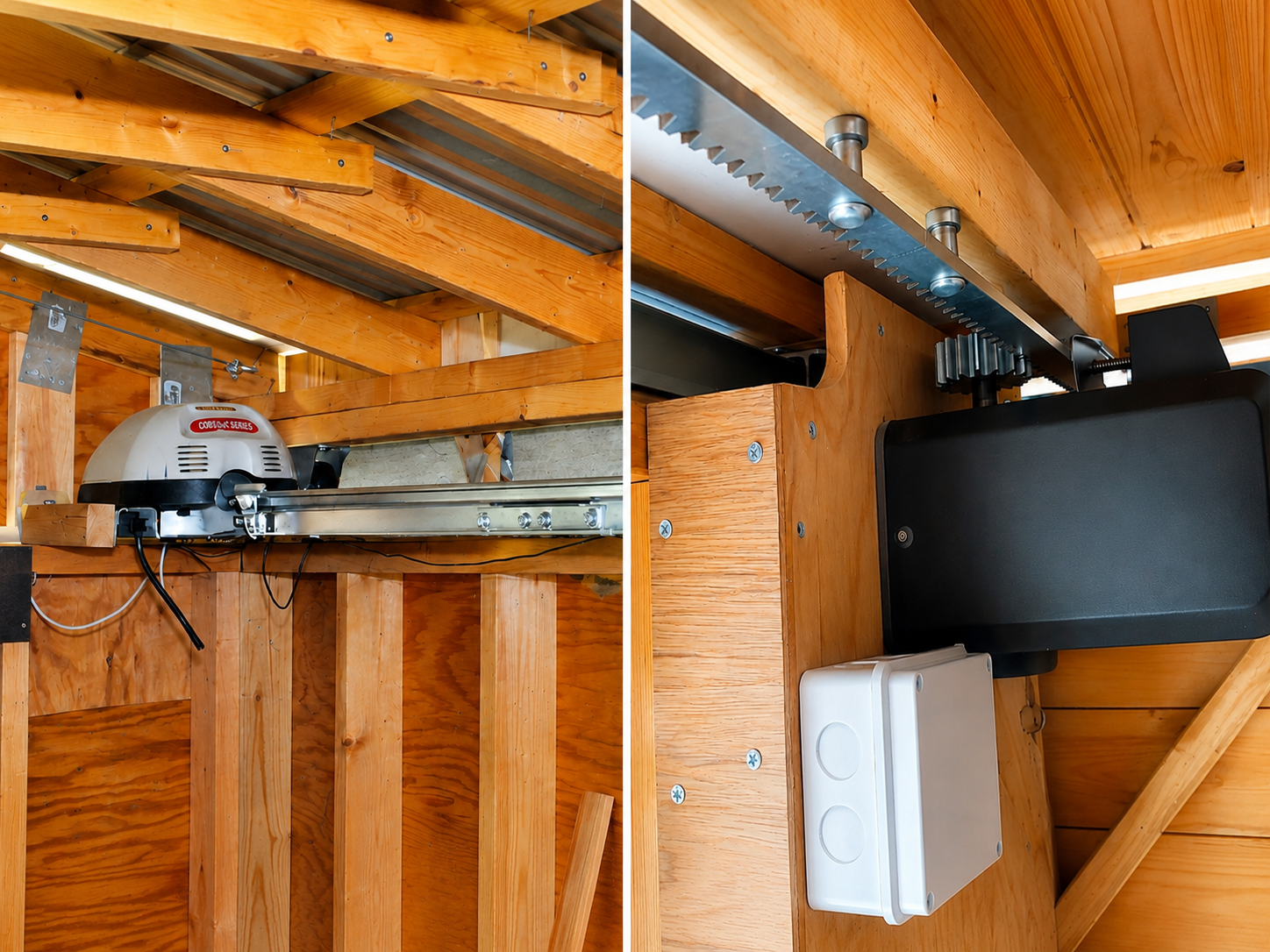
🔧 Observatory Roof Motorization: Choosing the Right Mechanical System (Complete Aurora 2.0 Guide) Transforming a simple garden shed into a fully automated astronomical observatory relies on one critical mechanical step: motorizing the roll-off roof. This is what determines the reliability of your setup, the safety of your optical equipment, and the precision of remote operation.

Automating Your Observatory: Which Motor Should You Choose for a Roll-Off Roof? Read More »

Strain Wave or Equatorial Mount: AM5N vs CEM70G in Astrophotography

Harmonic Mounts or Traditional Equatorial Mounts: Which One Should You Choose for Modern Astrophotography?

Introduction Over the past few years, harmonic drive mounts have significantly disrupted the amateur astrophotography market. Models such as the ZWO AM5N, Pegasus NYX-101, and iOptron HAE69 have demonstrated that it is now possible to carry several dozen kilograms of equipment with a mount weighing less than 6 kg. Meanwhile, traditional equatorial mounts have certainly

Harmonic Mounts or Traditional Equatorial Mounts: Which One Should You Choose for Modern Astrophotography? Read More »

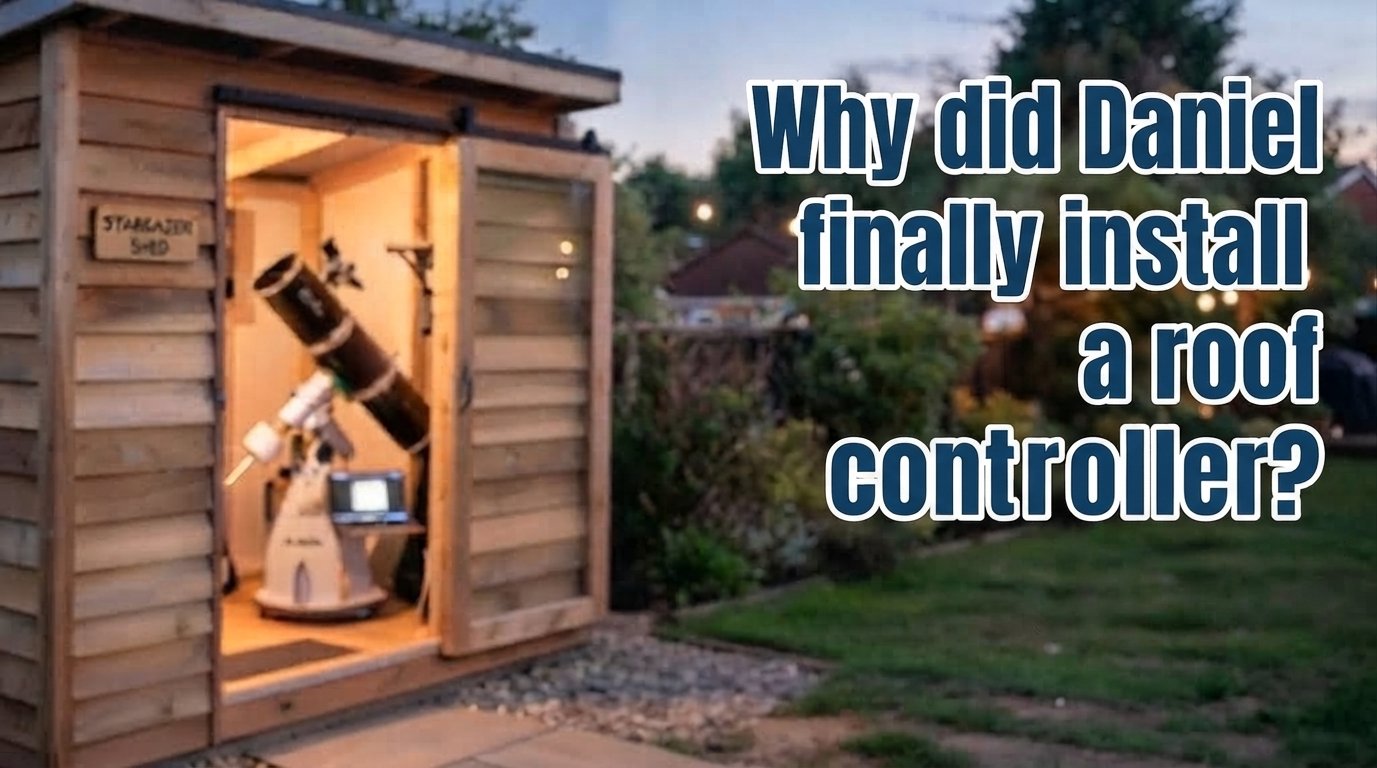
Observatoire astronomie amateur en bois avec toit roulant ouvert laissant apparaître un télescope, construit dans un jardin

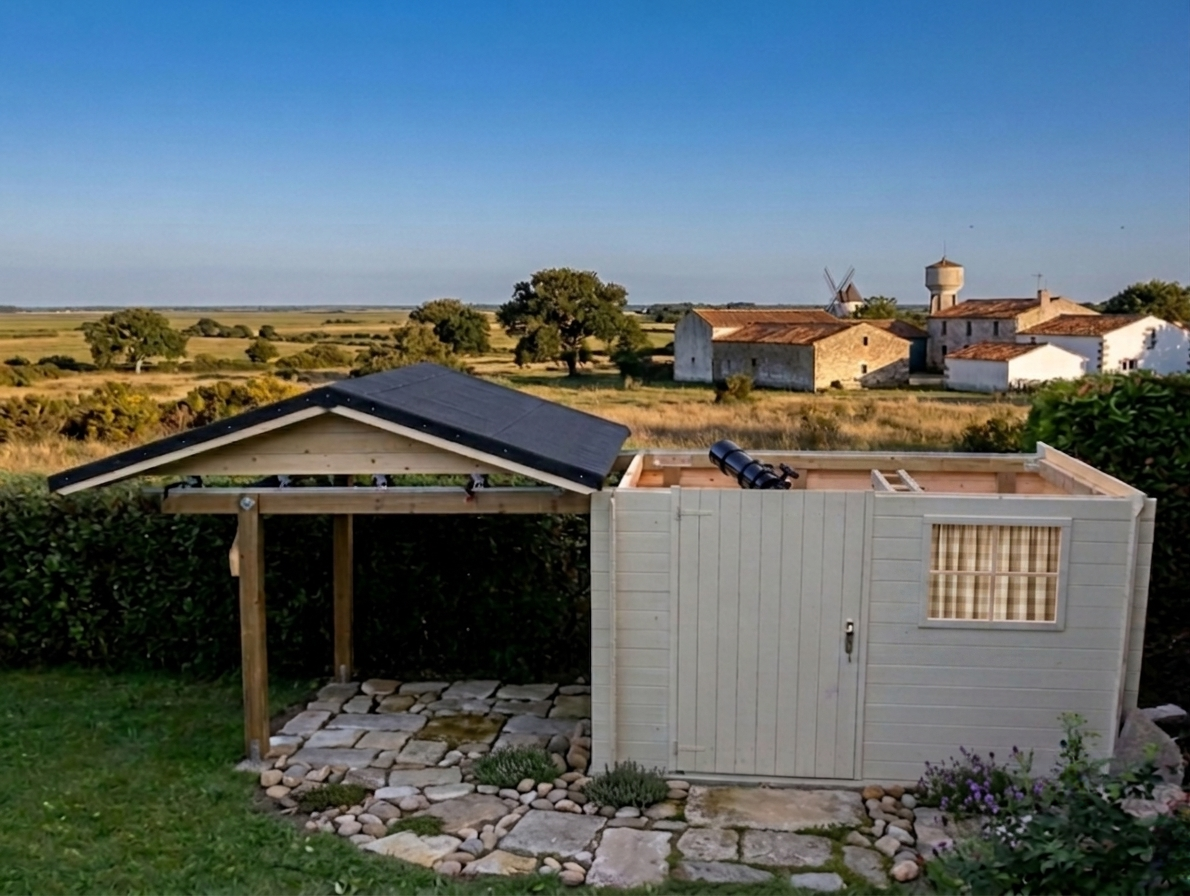
Garden Shed Converted into an Astronomical Observatory: Simple and Cost-Effective Solution

Garden Shed Converted into an Astronomical Observatory: Simple and Cost-Effective Solution Wooden amateur astronomy observatory with an open sliding roof revealing a telescope, built in a garden Affordable amateur astronomy observatory: garden shed + motorization Many astrophotography enthusiasts are now looking for a simple way to build an amateur astronomical observatory without breaking the bank.

Garden Shed Converted into an Astronomical Observatory: Simple and Cost-Effective Solution Read More »

Pourquoi les astrophotographes avancés arrêtent d’utiliser un seul observatoire (et passent à la gestion multi-systèmes)

Can You Control Multiple Astronomical Observatories from a Single PC?

Why Advanced Astrophotographers Stop Using a Single Observatory (and Move to Multi-System Management) When people think about an automated observatory, they usually picture a single mount, one telescope, a roll-off roof, and a dedicated computer controlling the entire system. For most amateur astronomers, this architecture is perfectly adequate. However, as needs evolve, an interesting question

Can You Control Multiple Astronomical Observatories from a Single PC? Read More »

Pourquoi certains astrophotographes produisent 10 fois plus d'images que vous avec le même matériel ?

Fixed Pier or Tripod in a Roll-Off Roof Observatory: Which Solution Should You Choose?

Why do some astrophotographers produce 10 times more images than you with the same equipment? The secret of the most productive astrophotographers: it’s neither the mount nor the camera When an amateur astronomer decides to build a Roll-Off Roof observatory, an important question quickly arises: should the mount be installed on a permanent pier or

Fixed Pier or Tripod in a Roll-Off Roof Observatory: Which Solution Should You Choose? Read More »

Sécurité d'un observatoire à toit roulant : faut-il faire confiance au télescope parké ou à un fin de course mécanique ?

Security of a roll-off roof observatory: should you rely on the “parked” telescope position or a mechanical limit switch?

One of the most feared risks in a roll-off roof observatory is a collision between the roof and the telescope. A handling error, software issue, or hardware failure can potentially cause significant damage to the optical tube, the mount, and the roll-off roof mechanism. To avoid this scenario, two approaches are generally used by amateur

Security of a roll-off roof observatory: should you rely on the “parked” telescope position or a mechanical limit switch? Read More »

Toit roulant motorisé : protection simple pour observatoire astronomique amateur

Motorized Roll-Off Roof: Simple Protection for Amateur Astronomy Observatories

When you invest in astrophotography gear, one question quickly becomes essential: how do you protect your telescope for the long term? Because beyond optical performance, the real daily challenge is often very concrete: preserving your equipment over time. This is exactly where a motorized roll-off roof comes into play for amateur astronomy observatories. Why Telescope

Motorized Roll-Off Roof: Simple Protection for Amateur Astronomy Observatories Read More »

Shopping Basket