Building your own astronomical observatory is a dream for many astrophotographers.
Having your telescope permanently installed, being able to start an imaging session within minutes, and taking full advantage of the best nights sounds ideal.
However, many projects run into the same problems: poor location, a badly designed structure, automation overlooked, or an underestimated budget.
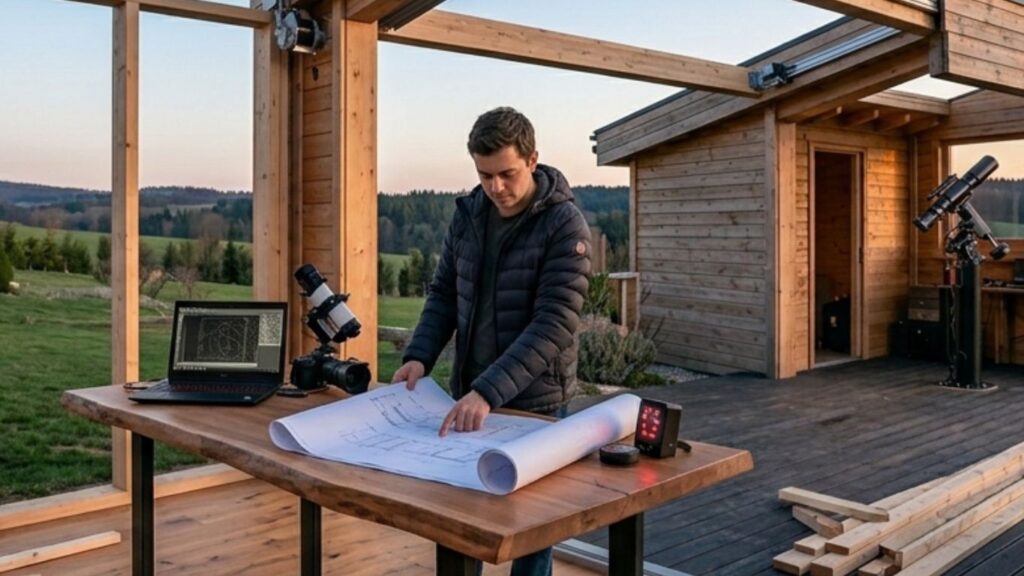
Before laying the first stone, here are the most common mistakes to avoid in order to create an observatory truly suited to modern astrophotography.
Mistake No. 1 — Building Your Observatory Before Defining Its Purpose
Many people start by looking for:
- a shed,
- a roll-off roof,
- a motor,
- a structure.
But the first question should be:
What do you want to do with your observatory?
An observatory designed for:
- occasional visual observation,
- deep-sky astrophotography,
- an automated setup,
- remote operation,
will not be designed in the same way.
Questions to consider before building:
- What telescope will be installed?
- Which mount will you use?
- Do you plan to upgrade your equipment in the future?
- Do you want to automate your observatory?
➡️ See also:
Building an Astronomical Observatory at Home: Is It Really Within Your Reach?
Mistake No. 2 — Underestimating the Importance of Location
An observatory can be technically perfect but poorly positioned.
Key factors include:
- light pollution
- nearby trees
- blocked horizon
- humidity
- electrical power supply
- network access
A good location often improves your results more than simply upgrading your equipment.
➡️ See also:
Garden Shed Converted into an Astronomical Observatory: A Simple and Affordable Solution
Mistake No. 3 — Building Too Small
At first, people only think about their current equipment.
But an observatory should anticipate:
- a new camera
- a new refractor
- a new telescope
- accessories
- maintenance space
A space that is too small quickly becomes a limitation.
Mistake No. 4 — Neglecting Mechanical Stability
An astrophotography telescope is extremely sensitive.
Vibrations can come from:
- unstable ground
- a poorly designed foundation
- a moved tripod
- the absence of a fixed pier
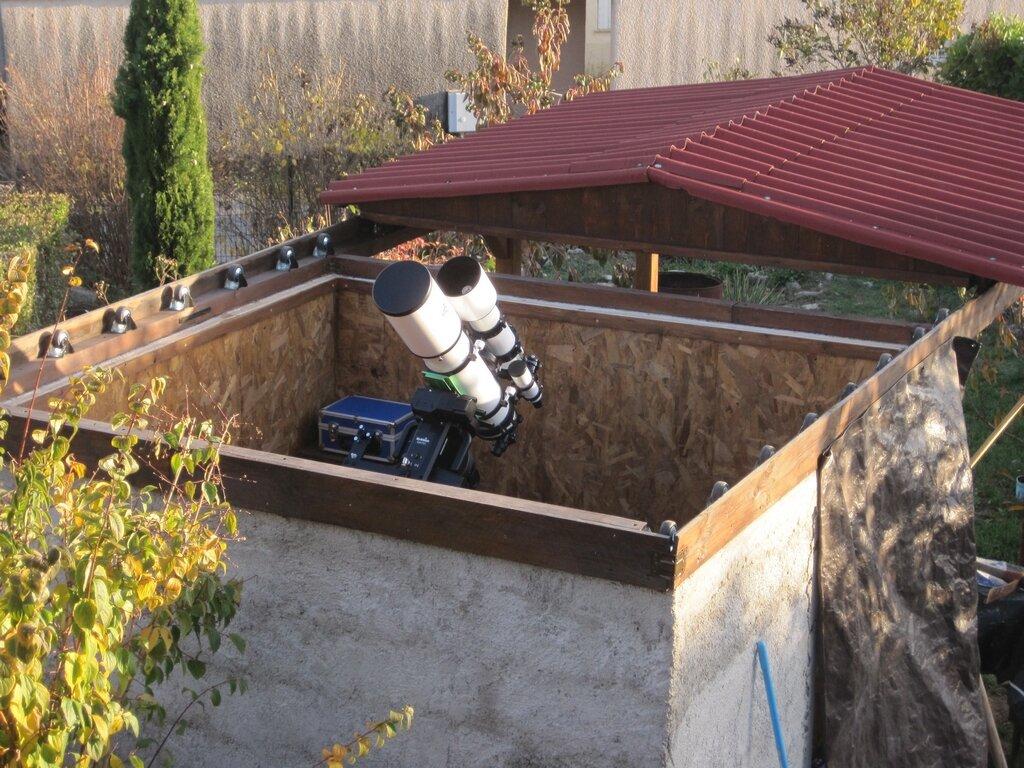
For a permanent setup, an astronomical pier can be a major improvement.
➡️ See also:
Fixed Pier or Tripod in a Roll-Off Roof Observatory: Which Solution Should You Choose?
Mistake No. 5 — Thinking About the Roll-Off Roof Too Late
Many people first imagine a traditional structure and only later think about how to motorize it.
The result:
- expensive modifications
- mechanical constraints
- complicated automation
A modern observatory should be designed from the beginning around:
- opening
- closing
- safety
- motorization
- computer control
➡️ See also:
How Does an Astronomical Observatory Roll-Off Roof Work?
Mistake No. 6 — Forgetting Safety and Failure Scenarios
An automated observatory must continue to operate safely even when everything does not go perfectly.
You need to plan for:
- power outages
- network loss
- telescope position errors
- roof closing procedures
- mechanical limit switches
Safety should never depend on a single software element.
Conclusion
A good amateur astronomical observatory is not simply a shelter to protect a telescope.
It is an environment designed around one objective:
Spend less time preparing your equipment and more time capturing the sky.
Before building, take the time to think about your goals, future upgrades, and the level of automation you want.
See also:
How Much Does an Amateur Astronomical Observatory Cost in 2026?
Would you like to automate your roll-off roof?
Once your observatory has been properly designed, automation can save you valuable time and make your astrophotography sessions easier and more enjoyable.
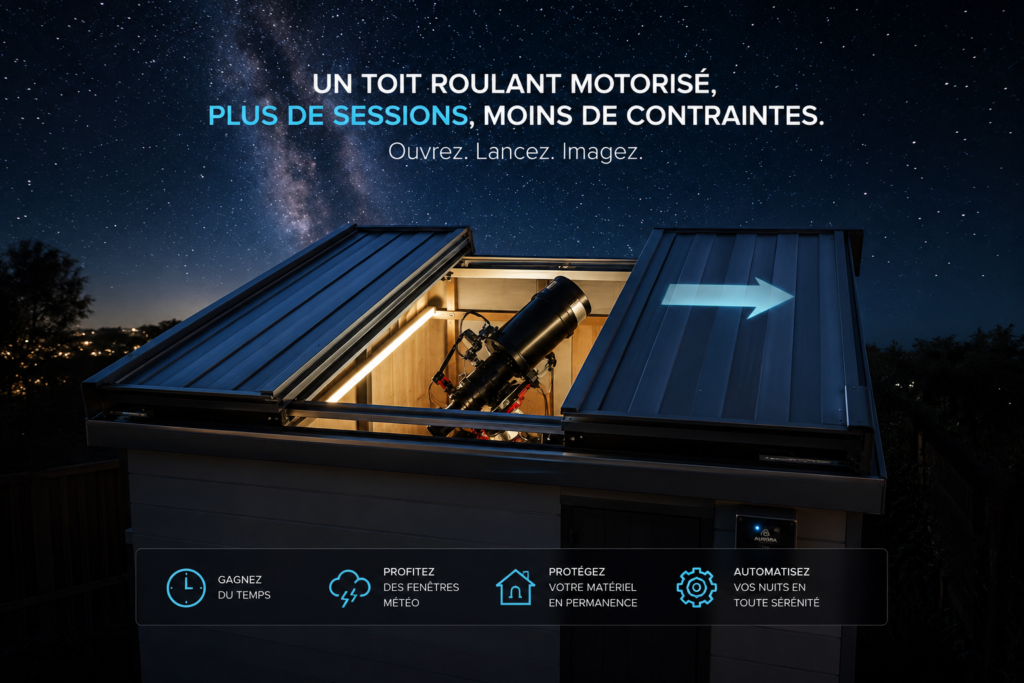
Aurora 2.0 is a roll-off roof controller designed for amateur astronomical observatories. Compatible with ASCOM and optimized for N.I.N.A., it allows you to integrate the opening and closing of your roof into your automated setup.
Your observatory is ready. Your telescope is ready too. Why not automate the roof?
FAQ: Amateur Astronomical Observatory
Do you need a large plot of land to build an amateur astronomical observatory?
No. Many amateur observatories are built in small gardens using a compact motorized roll-off roof system.
Is an automated astronomical observatory complicated?
Not necessarily. Today, many solutions are designed to remain accessible to amateur astronomy enthusiasts.
Can you automate an observatory gradually?
Yes. Many amateur astronomers start by motorizing the roll-off roof before adding other automation features.
Get early access to our latest articles, practical tips for your astronomical observatory, and exclusive offers.