Why do astrophotographers miss so many usable nights?
There is a situation that many astrophotographers know all too well.
The weather forecast finally announces a clear break. The sky looks stable. The night has all the ingredients for a great imaging session.
And yet… nothing happens.
The equipment stays indoors.
Not because the passion is gone, but because a simple thought immediately comes to mind:
“Do I really have the energy to set everything up tonight?”
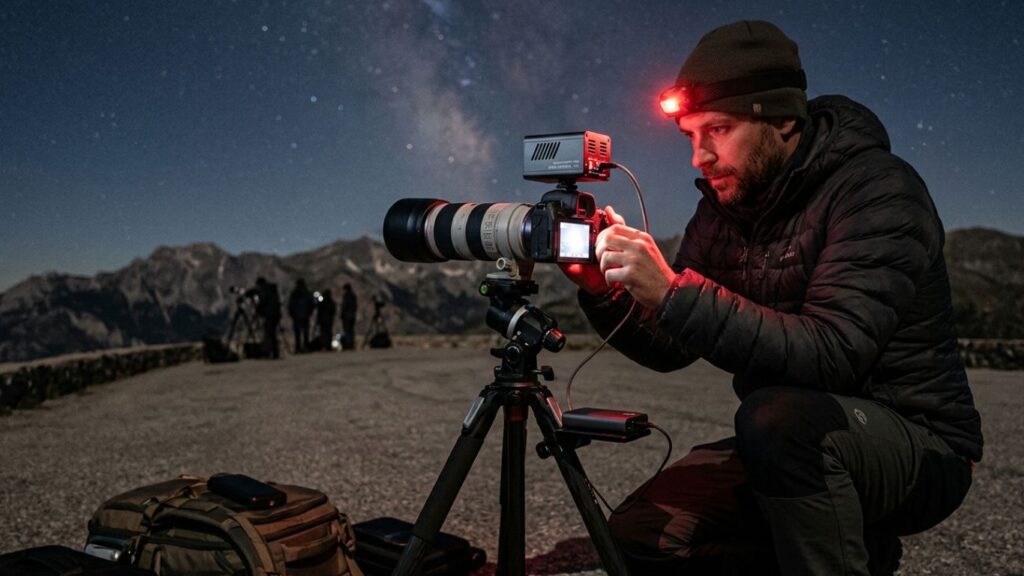
The tripod. The mount. The telescope. The cables. The power supply. The computer. Polar alignment. Software configuration. Then packing everything away late at night or early the next morning.
Over time, many amateur astronomers realize something important: weather is not always the factor limiting their astrophotography sessions.
Sometimes, the real obstacle is logistics.
The real problem is not always the weather
When people start astrophotography, they often assume that the main challenge will be the sky itself.
Light pollution. Clouds. Atmospheric turbulence. Moonlight.
But after months or years of experience, many discover another reality.
Even when conditions finally become favorable, you still need enough energy to prepare everything.
And that is often where opportunities are lost.
Not because of a lack of passion, but because of the mental fatigue associated with every setup.
Astrophotography often involves much more than simply placing a telescope outside.
It may require:
- Carrying dozens of kilograms of equipment
- Performing polar alignment again
- Reconnecting all cables
- Waiting for thermal equilibrium
- Checking power supplies
- Launching imaging software
- Monitoring tracking performance
When a clear weather window only lasts a few hours, many people end up thinking:
“Maybe another night.”
The hidden fatigue of setup
This is a topic that is rarely discussed.
Yet many astrophotographers gradually skip imaging opportunities because of the accumulation of these small constraints.
After a full day of work, motivation alone is not always enough.
Especially when you know everything will need to be packed away again in the middle of the night.
This is often the moment when amateur astronomers begin looking for a different way to enjoy their hobby.
Not to make things more complicated.
But to make them simpler.
🔭 Want to make the most of more clear nights?
Receive our upcoming tips on amateur observatories, motorized roll-off roofs, automation, and remote astrophotography.
Practical advice to spend less time setting up your equipment… and more time capturing the night sky.
👉 Receive our latest articles directly by email
Why permanent setups completely change the experience
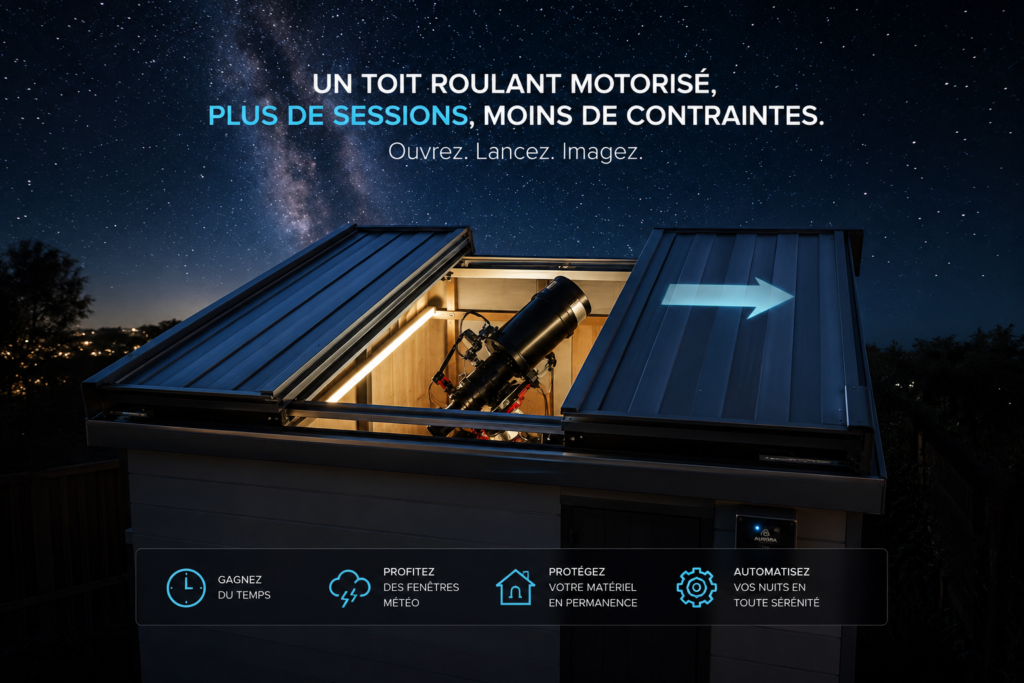
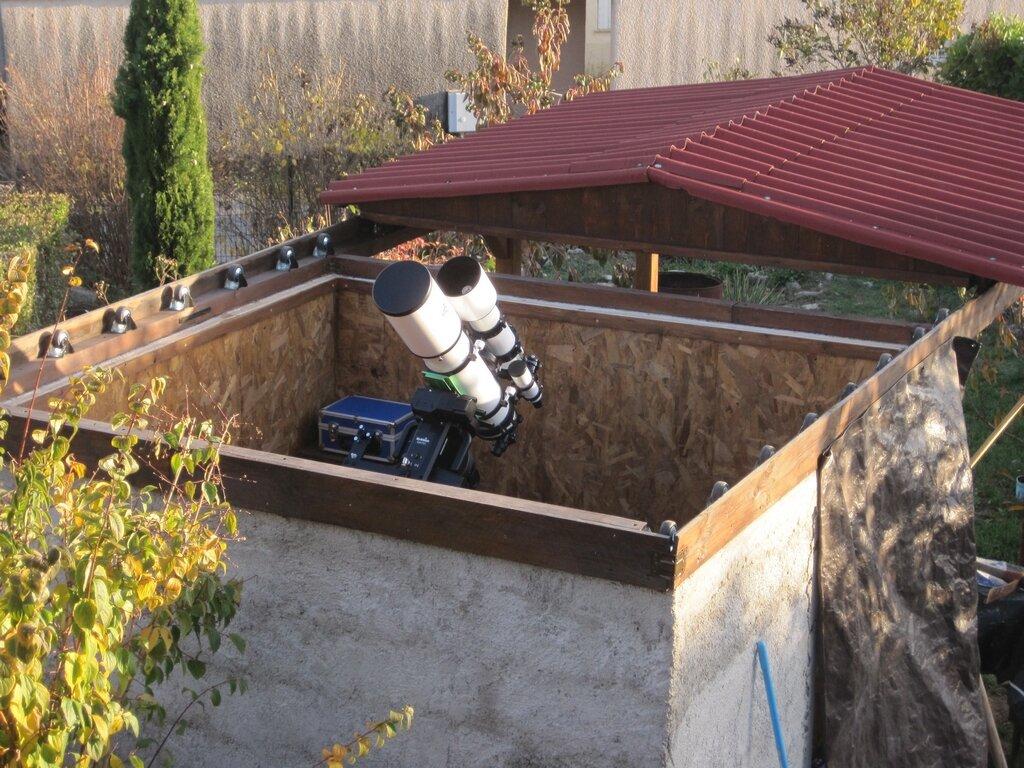
This is precisely why more and more astrophotographers are moving toward permanent setups and amateur roll-off roof observatories.
The principle is simple.
The equipment remains installed, aligned, and ready to operate.
When the sky becomes interesting, there is no need to repeat the entire preparation process.
In some cases, only a few minutes are needed to start an imaging session.
And this single change often transforms the frequency of observations.
When a setup is always ready:
- Sessions become more spontaneous
- Short weather windows become usable again
- The required effort drops dramatically
- Weeknight observing becomes much easier
Many amateurs discover that they were never lacking motivation.
What they were missing was a system that was always ready to observe.
🚀 What if your observatory were always ready to observe?
A permanent setup already eliminates much of the hassle and preparation required before each session.
With Aurora 2.0, you can take it a step further by automating the control of your roll-off roof and turning your observatory into a truly ready-to-use automated setup.
👉 Discover Aurora 2.0, the smart controller for your roll-off roof
More observing, less effort
This is probably one of the biggest benefits of an automated amateur observatory.
The goal is not simply automation.
The real objective is often much simpler: restoring spontaneity.
Being able to take advantage of a clear night without turning every session into a lengthy technical project.
Being able to observe even when available time is limited.
Being able to start an imaging session quickly and easily.
And ultimately… spending more time doing astrophotography.
Automation is becoming accessible to amateurs
For a long time, automated observatories seemed reserved for professional installations.
Today, things are changing rapidly.
Motorized roll-off roof systems are becoming more affordable, easier to install, and better suited to amateur astronomers.
It is now possible to build a personal observatory without requiring a massive budget or advanced engineering skills.
For many astrophotographers, this evolution completely changes the way they experience their passion.
Because in the end, the hardest part of astrophotography is not always capturing the sky.
Sometimes… it is simply getting started.
🌌 What if your observatory simply made it easier to get started?
A permanent setup already significantly reduces the amount of preparation and handling required.
With Aurora 2.0, your roll-off roof can become an integral part of an automated observatory, making it easier to take advantage of clear weather windows and your astrophotography nights.
Less preparation.
Less hassle.
More nights actually spent imaging.
👉 Discover Aurora 2.0 and automate your roll-off roof